Showing posts with label Goodreads. Show all posts

Monday, September 7, 2020

The Southern Book Club's Guide to Slaying Vampires (Book Review)

The Southern Book Club's Guide to Slaying VampiresThe Southern Book Club's Guide to Slaying Vampires by Grady Hendrix
My rating: 2 of 5 stars

In all fairness to Mr. Hendrix, I should stipulate that my two-star rating has less to do with his writing quality and more to do with the fact that this book was not what I was expecting.
Based on the title and the synopsis, I was expecting something funnier, cleverer, sassier, possibly even sillier. This book is not those things.

I did not expect but did appreciate the feminism, the blasting of 1980s and 90s patriarchy, the acknowledgement of systemic racism and white privilege.

Hendrix lost me at the gore, I suppose. If you are a fan of horror as a genre, you may well enjoy this book and his gruesome turn of phrase. I did not, and a few times considered putting the book down; another point in Hendrix's favor that I did actually finish the novel.

**SPOILER ALERT**

I would also call this "the book of false endings." 

At several different chapters' ends, I expected the next chapter to be a sort of wrap-up, a "where are they now" with our antagonist firmly put in his place with perhaps a smug thought from Patricia and/or her cohorts. That does not happen. The book keeps going, and when the antagonist does finally meet his doom at the hands of the Southern ladies, it is neither clever nor smart nor neatly tied up with a bow; it is, however,...thorough.

View all my reviews

Friday, August 9, 2019

Reticence: A Review

Reticence (Custard Protocol, #4)Reticence by Gail Carriger
My rating: 4 of 5 stars

Reticence marks the end of an era, as Miss Gail Carriger has already stated that there will be no more books in the Parasol Protectorate/Custard Protocol universe. For that alone it deserves the four stars as creating this universe and such a series of books (3 generations of characters!) is no small feat.

The rest of this review does have spoilers, so click accordingly. 


Was Reticence Carriger's best book in the series? No, it wasn't. She's had others that made me feel more (How to Marry a Werewolf comes to mind; I bawled like a baby at Faith's big reveal); she's had others that made me laugh more at some of the ridiculousness and utterly dry delivery (the lobster line in Poison or Protect, anyone?). And, of course, nothing beats the original; Soulless was the first love for many of us.

Like many sequels, prequels, and other "-els", Reticence sometimes falls into the trap of wrapping up things a little too neatly; Carriger, of course, acknowledges this with the cheeky epilogue, aptly titled "With a Neat Little Bow." Bringing in the characters from the Finishing School series felt a little forced. While we knew that Agatha was sponsored by Lord Akeldama (a.k.a. Goldenrod), the fact that he's been playing this game with these ladies all along was perhaps a little too contrived. Similarly, mentioning that "Miss Imogene" had been around "forever" (with Genevieve LeFoux) felt shoe-horned in, probably because of the writing order; when we're first introduced to adult Quesnel in Prudence (and his mother), Romancing the Inventor (Imogene's introduction to the universe) hadn't been written yet.

My other quibble (and it really just a quibble, a matter of style and preference, really) is one that I also noticed in both The 5th Gender and Competence: playing the ending. When our two main characters meet, their romantic involvement is already a foregone conclusion. Granted, we spend the book watching them try to tell each other (which is amusing); however, I seem to prefer it when we spend a good portion of the book watching the characters trying to figure out their feelings. Arsenic and Percy (and Tris and his detective, and to a lesser extent Prim and Tasherit) already know they are attracted to each other. To me, the rest of the novel then feels a bit rushed since we already know the conclusion coming. I much preferred it, to use an example, when Alexia and Connall didn't quite realize their feelings for each other (though nearly everyone else around them did); their dance around each other (and their feelings) was much more interesting to me that way. It could also be due to the narration type in the books; Alexia's books are primarily (though not 100%) from her limited POV; in the others, we get fairly unfettered access to several different characters' minds.

All of that said, do I regret buying this within minutes of it being released and procrastinating at my office over the course of two days to read it? Absolutely not.
It was still full of Carriger style: charming, sweet, flirty (yes, please, to the boot-unlacing bit!) and had my favorite cameo thus far (Lady Manami).

View all my reviews

Tuesday, January 30, 2018

School for Sidekicks: A Review

School for SidekicksSchool for Sidekicks by Kelly McCullough
My rating: 3 of 5 stars

This book is fun and a fairly easy read. It definitely could be classified as "Young Adult" lit. I liked it just fine, although there's nothing particularly outstanding to write home about. #SPOILER -- STOP READING HERE


McCullough does [eave plenty of room for a sequel or three as there is no real resolution, not to the major issue at hand. That said, there's barely a resolution to many of the smaller issues. That's not necessarily a bad thing; not everything has to be wrapped up neatly in a bow.


If you have a day to spare and like superheroes, give it a try.
A quote I highlighted (and good to know):  "for the record, fresh scabweb tastes like condensed essence of armpit."

View all my reviews

Friday, July 21, 2017

Armada (Book Review)

ArmadaArmada by Ernest Cline
My rating: 4 of 5 stars

First things first: is it as good as Ready Player One? That's kind of a loaded question. I can answer it by saying this is different from Ready Player One. While still definitely science fiction, Armada is firmly rooted in the present (well, 2015, when it was published), whereas Ready Player One exists in a mythical near-future. If you like your sci-fi farther away than the here and now, then no, you probably won't enjoy Armada as much as you enjoyed Ready Player One.

Putting Armada in the "real world" (so to speak) does allow for some great additional pop culture references that wouldn't have otherwise made it in. Pop culture and geeky stuff is one of the things Ernest Cline excels at, so he's doing us all a favor by adding some more. Where Ready Player One had a heavy 80s nostalgia going on, Armada gives us that, some mid-70s nostalgia like Star Wars, and then some more contemporary stuff like Firefly and Battlestar Galactica, plus some additional genres -- meaning, we're not just dealing with video game-type nostalgia here, we're dealing with science fiction across movies and games, alien invasions like Close Encounters, Contact, and (of course) Independence Day.

Armada is pretty action-oriented; indeed, most of the major plot events take place over the course of just a few hours, rather days or months. Additionally, if it's hard for you to visualize some things like spaceship cockpits, aerial maneuvers, and fighting techniques (like it is for me), you may start to glaze over (like I did) when Cline's text gets weighed down by his own technical prowess. Even so, I didn't stop reading (finished it in 3 days).

Other possible "cons" -- yes, it is a coming of age story of sorts. So if you don't like reading about teenage white boys attempting to figure out life, you won't like this; thankfully, that aspect is neither forced nor the focus of the story, otherwise my patience would have been spent. And it's definitely a story with some "daddy issues," which Cline's protagonist calls out right away. In fact, he acknowledges a couple of tropes right out of the gate, and some of them even get subverted a bit, which I always appreciate. But "daddy issues" also have their place of honor in most sci-fi canons, so it's not out of place in Armada either.

Last but not least, these are teenage boys, and they speak like teenage boys, most of which I found both realistic and pretty amusing. And possibly indicative that I might also speak like a teenage boy.

View all my reviews

Monday, April 3, 2017

Review: Marine Biology

Marine BiologyMarine Biology by Gail Carriger
My rating: 3 of 5 stars

Three stars is rather low for me for a Gail Carriger book. I think much of that stems from it being rather short (yes, I know it's a short story). Nonetheless, it felt a bit rushed, especially toward the end: one sort-of dinner date, and now (Read on Goodreads to view spoiler) but it still seemed a little too "wrapped up neatly with a bow" for my taste.

On the other hand, some of the exposition just left me with more questions: like why are two merpeople investigating financial crimes? Is this a twentieth-century, American version of B.U.R. (and maybe I missed that detail?)?

Now that I think about it, "Two merpeople investigating financial crimes" actually sounds like a decent T.V. series -- BRB!

Tuesday, December 13, 2016

Review: The Paper Magician

The Paper Magician (The Paper Magician Trilogy, #1)The Paper Magician by Charlie N. Holmberg
My rating: 2 of 5 stars

Well, like many books, this one started out well. My first thoughts within the first couple of chapters were that it was hitting the Daddy Long-Legs-meets-Jane-Eyre genre fairly hard. That's not necessarily a bad thing; it was just very obvious. Just as that bit was nearly played out, EXPLOSIONS!

And then the majority of the book was spent traveling through Magician Thane's literal and metaphorical heart(s). At the same time. Don't ask me how that's possible because I don't know. Once Ceony survived that, the ending was predictable as the above mentioned books would have it, if a little "twee" (and less adult) in its presentation.

My issues with this book can be listed as follows:
No subtlety: in addition to the obvious ploys listed above, there was little subtlety anywhere to be found. Our villainess Lira had blood-red lips, dark eyes, a large bosom, and if that wasn't enough, she actually threw blood from her dripping fingertips. Nothing delicate or subtle there.

Time period anachronisms: if you're going to insist that the book is set in late eighteenth-early twentietch century London, then you best be sure to not use contemporary words such as "make-up," "barrettes," "catering," and the like. How could a man slip his "ungloved hand" up Ceony's skirt if she was standing and he was seated? The skirt would have been down to her ankles, not to mention the layers of petticoats and undergarments. A lady, even an evil lady like Lira, never would have worn pants. A schoolgirl like Ceony would have been shocked to seem them. And they wouldn't have been called "pants" (see below).

Lack of Britishisms: I haven't looked up if Holmberg is British, but for a book set in England, it was nearly devoid of Englishness, including but not limited to: tea (serving and making of), saying "trousers" instead of "pants," etc.

It's entirely fine to have an English-like universe set it an unnamed time where one can mix and match their verbiage as they see fit. However, by giving concrete times and places, a writer is best to stick within those conventions. If you don't know the conventions, do the research. If you don't want to do the research, don't give concrete details to which your story is tied.

Pros:
To quote the book, "I like the dog."

While Book #2 promises to continue Ceony and Thane's story, I doubt I'll be reading it.

View all my reviews

Saturday, July 9, 2016

Book Review: Poison or Protect

Poison or Protect (Delightfully Deadly, #1)Poison or Protect by Gail Carriger
My rating: 5 of 5 stars

Let it be known that I don't often give five-star reviews. So for a novella to earn that from me,...well, that's kind of a big deal. But when I finished Gail Carriger's Poison or Protect I was satisfied, for lack of a better word. I couldn't think of something I'd want to change or rewrite or edit; there was nothing dangling in my head as "unfinished."

It is the mark of a good writer that s/he can make us feel affection for villains, or, more accurately, that s/he gives us rounded, fleshed out characters who are complicated and complex, rather than flat characters who can be described as "hero" or "villain" with no grey area in between*. And Carriger has just done just that with Lady Preshea Villentia, the Mourning Star (and extra points for always giving us fantastic character names!).

If you've read Carriger's "Finishing School" series, you will recognize Preshea as one of the "mean girls" of Mademoiselle Geraldine’s Finishing Academy for Young Ladies of Quality.
[Please note that you absolutely do not have to read those four books in order to read and enjoy this novella. Some of the winks and nods to the reader may be lost on you, but you won't even notice as they fly by.]
Telling (at least half of) this story from Preshea's point of view gives us a chance to understand her and her meanness just a bit more. Carriger doesn't try to change or rescue Preshea; she simply gives us insight to a complicated character. As Poison or Protect takes places a couple of decades after the Finishing School series, there is plenty of time for Carriger to fill in Preshea's backstory.

I also found it rather remarkable that, for a universe built on the existence of the supernatural (as that's where the Parasol Protectorate books start), there are only two -- count' em, TWO -- supernatural characters in this book**. And only briefly at that. (You'll recognize them both.) While some of the other characters refer, briefly and generally, to werewolves and vampires, they are not the focus; and the book does not suffer for it. I don't think that's a feat easily attained.

And while we're on the subject, the "steampunkiness" of Carriger's universe is also not such a focus in this novella. A couple of dirigibles here and there, and that's about it. Very little gadgetry, yet we do not notice that it's missing. It was only after the fact that I came to these two realizations.

So without the supernatural and without the steampunk, what are we left with? Dammit, Gail Garriger, you got me to read a romance novel(la)!! And I may or may not have enjoyed it. I may never forgive you for that.

Speaking of romance, Carriger manages to write some very tasteful (though no less sexy and/or erotic) sex scenes. I think I saw the word "cock" maybe once. I'm no shrinking violet when it comes to sex (or sex scenes), but there was nothing crude or vulgar about these. I appreciated that.

Last but not least: writing in Scottish dialect. I don't think I'll ever tire of some of these characters and their "dinna's" and "ken's." It's just sprinkled in there, even in their thoughts, and never forced in a way that feels like "I'M SCOTTISH. HERE I AM SPEAKING SCOTTISH AND DOING SCOTTISH THINGS."

So go, read, enjoy. Whether or not you do it whilst drinking tea and wearing a corset is up to you.

*See also Marissa Meyers' Fairest (Lunar Chronicles #3.5), or even just the first few chapters of Game of Thrones. When the POV switches, we suddenly find ourselves not sure whose side we're supposed to be on.
**I should say three, I think. There is Formerly Connie.
***Y'know what,...there is something slightly left unfinished
(click to read whole review with spoiler).

View all my reviews

Wednesday, July 6, 2016

Book Review: A Hundred Essays I Don't Have Time to Write

100 Essays I Don't Have Time to Write: On Umbrellas and Sword Fights, Parades and Dogs, Fire Alarms, Children, and Theater100 Essays I Don't Have Time to Write: On Umbrellas and Sword Fights, Parades and Dogs, Fire Alarms, Children, and Theater by Sarah Ruhl
My rating: 5 of 5 stars

You MUST read this book. If you are an actor, playwright, dramaturg, technician, director, producer, stage manager, and/or lover of theatre/storytelling of any kind, you need to allow Sarah Ruhl's brilliant essays into your life. There are only a hundred of them (with the longest being maybe three pages); you'd do well to find the time.

Ruhl's wit and wisdom are apparent in the very title, and they carry through her offerings. One of this book's best qualities is that these are a hundred essays she "doesn't have time to write" -- meaning, none of them are too long, and Ruhl isn't necessarily digging for truth or trying to unlock the earth's great mysteries. She asks a lot of questions, but does not force any answers. Ruhl tells some wonderful, touching, funny stories (some of which may or may not have brought me to tears whilst on the treadmill at the gym), but she's not didactic. She'll make you stop and think about storytelling and theatre and drama and communities and our need for play and social interaction. But she'll never make you feel like she's demanding that you think about these things.

I didn't necessarily agree with all of the points she brought up (her bit on subtext in dialogue, in particular, seemed counter to everything I've learned), but I appreciated the opportunity to see another viewpoint and to maybe -- just maybe -- approach some of my own work differently.

I borrowed this book from the library, but that didn't stop me from highlighting a passage in nearly every essay, sometimes two! (On my Kindle, people, don't freak out.) I'm still going to have to buy it so I can go back and read those gems whenever I like.

Like I said, you MUST READ THIS BOOK. This book is a necessary tool of the craft, right up there with Anne Lamott's Bird by Bird: Some Instructions on Writing and Life. The two shall be bosom companions on my bookshelf.

View all my reviews

Sunday, February 21, 2016

Matched: A Review

Matched (Matched #1)Matched by Ally Condie
My rating: 4 of 5 stars

There were times that I was willing to write off this book as yet another YA, dystopian lit. knock-off, focused on "does he really like me?" What separates this book (and hopefully the whole series) from the herd, I think, is its focus on art and creativity. The ruling class ("the Society") doesn't just control food, (read entire review on Goodreads for spoiler) That aspect made this futuristic Society very real for me, more so than most other novels, because it refers to things we have here and now in tangible manner.

Yes, there is the teenager love-triangle issue, although I imagine that all dystopian fiction has to have some aspect of love/want/desire to fuel the protagonist's fight for change. (At least in the The Hunger Games, the initial love was familial and not romantic.)

Condie's novel kept me reading and interested (which is saying a lot), and I will be pursuing the next book in the series to see where it goes. Hopefully she can maintain this momentum and interest through all three books (and not fall flat by the third, as so many do -- Allegiant, I'm looking at you).

View all my reviews

Monday, January 11, 2016

The Curious Case of the Werewolf That Wasn't, the Mummy That Was, and the Cat in the Jar (Book Review)

The Curious Case of the Werewolf That Wasn't, the Mummy That Was, and the Cat in the JarThe Curious Case of the Werewolf That Wasn't, the Mummy That Was, and the Cat in the Jar by Gail Carriger
My rating: 3 of 5 stars

I was delighted to find this little gem from the Parasol Protectorate universe, especially for only ninety-nine cents! It is a quick read (and satisfies the "a book you read in a day" requirement for my 2016 challenge). Even in this short story, Carriger maintains her kid-glove grip on the "free and indirect discourse" style initiated by Jane Austen; her use of language and tone is always spot-on for the time period.

That being said, I was a little surprised at how violent and, well, douche-y Alessandro Tarabotti is. Perhaps it's been too long since I read all of the original Parasol Protectorate, but his (spoiler; click here to read review in its entirety)  Granted, we know very little about Alexia's father until her trip to Egypt -- like I said, it's been too long since I've read that book.

Carriger's blog says this story takes place approximately ten years before The Finishing School series, and it also ties in nicely with the first of Prudence's books, too.
And extra points to Carriger for longest short story title :-)

View all my reviews

Saturday, January 9, 2016

Another Year, Another Failure

Subtitle:  Stop Judging Me, Goodreads!!!

I failed my reading challenge again.  I even said I was "only" going to read 25 books this time around -- super easy, right?  Wrong (apparently).  I was seven books shy of my goal.

This year, instead of going for quantity, I think I'll go for type of books, as indicated by this list:

I found this list on Facebook, via at least two other friends.  And it's "only" twelve books.  I think this will work.  Maybe.  Some books may satisfy more than one requirement (a book that I've previously abandoned was probably both published before I was born and something I should have read [or finished] in school).

By the way, if you are a Goodreads user (Leonard is), what do you do with books you didn't finish, but you definitely stopped reading?  Because you didn't really "finish" them (especially in terms of a reading goal), but you can no longer waste your time on their insipid prose.  What then?  Just curious.  Leonard tried starting a shelf called "dead files" for them, but they are still listed on one of Goodreads' main shelves (read, to read, currently reading) that users cannot get rid of.  Please leave your answer/suggestion in the comments.

Friday, July 4, 2014

Review: The Goldfinch

The GoldfinchThe Goldfinch by Donna Tartt
My rating: 2 of 5 stars

I did not quite care for this book. I finished it through sheer force of will. Part of the reason I think I didn't like it is I didn't know what I was getting myself into. I had the impression it was more of a mystery based on the painting in question, rather than the sort of coming of age story it turned out to be. Don't get me wrong; I enjoy a good bildungsroman, but usually of the female persuasion. It also helps when reading a story of this length to actually like the protagonist. By the time he's an adult, I didn't like Theo.

Well, that's not entirely true. Within the first fifteen pages, I was bored with Theo; I have little patience for boys idolizing their mothers, living or dead. But moving on...

He keeps making poor decisions, and we just have to read along, letting it happen -- again and again and again and again. The entire novel is his downward hate spiral of self-loathing and guilt. It took me so long to finish this book because I would have to stop reading out of either frustration or boredom. Frustration because Theo continues to make the same mistakes again and again (and does not learn from them) and boredom because it's so fucking long.

I know long books. I majored in Victorian literature, for Christ's sake! But every one of Tartt's sections (and each chapter is divided into about five sections) is at least two pages longer than it needs to be. This book needs a good editor to show her where she's reached the peak of each section and to stop; instead Tartt keeps going, hitting us over the head with the non-stop descriptions and rambling sentence fragments.

I found the ending to be anti-climatic. I'm not sure what I was expecting, but this wasn't it. I guess seeing as how (read entire review on Goodreads to view spoiler) Moreover, the last "section" loses Theo's voice entirely and turns into what I can only assume is Tartt where she expounds needlessly on life, death, meaning, fate, yadda yadda yadda. I started skimming because it didn't seem relevant to the story at all, and I don't enjoy other people's moralizing.

I'm giving it two stars instead of one because I did feel compelled to finish it. I would give up, put the book down, then pick it back up again (days or weeks later) just to have stuff get interesting again. Sadly, those interesting bits were usually short-lived, but she did draw me in from time to time.

If you enjoyed this book, good for you, though I don't understand why. I will not be recommending it to anyone except people I feel need to be punished in a literary manner.
View all my reviews

Tuesday, May 20, 2014

Review: Insurgent

Insurgent (Divergent, #2)Insurgent by Veronica Roth
My rating: 3 of 5 stars

Well, here we are again, at the end of a second book in a series, and I've rated it slightly lower than the first book. Again, I say it's because the inner workings of this world (the factions, the Choosing, the Initiations and training) are no longer new. I think it's that kind of minutia that I find fascinating.

As the book began, I actually started to get a little bored. It could be because I had already read the first chapter of Insurgent as a "sneak preview" at the end of Divergent. But more than that, it quickly started to feel like an action movie. Now don't get me wrong; I love action movies. But I want to watch them, not read about them. Just as I started to feel this was going to be nothing more than running and shooting guns, two things happened that both the characters in the book and I had forgotten about: (view on Goodreads to read see the spoiler) The former felt like a much more important plot development than the latter, which sort of feels like "shock value."

It's only about 7/8 through the book where we really find out what we're fighting for, and even then, it's still vague. It was unclear to me (until the very, very end) if Tris knew all of the information from Marcus, et al, but just hadn't shared it with the reader, or if she was flying blind, too. It's only when those things ("THE information") are brought to light that the story becomes truly interesting again because it is no longer recycling old ideas and old conflicts.

Towards the end (during that same 7/8 period), I did find one "continuity" mistake, and that bothered me. It both is and is not a big deal. (spoiler on Goodreads) So someone dropped the ball on that one.

The book ends with a definite cliffhanger, and in a moment of truly good timing from the Universe, my turn on the wait list for Allegiant has come up just as I finished Insurgent. Needless to say, I am intrigued to see how this all ends.
View all my reviews

Monday, May 5, 2014

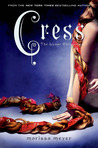
Review: Cress

Cress (The Lunar Chronicles, #3)Cress by Marissa Meyer
My rating: 4 of 5 stars

One phrase comes to mind after finishing Cress, the third book in Marissa Meyer's Lunar Chronicles series: "balancing act." While each book is Meyer's take on traditional fairy tales such as Cinderella and Rapunzel, each book also connects those characters in a larger story. By the time we get to Cress, we have Cinderella and her Prince, Little Red Riding Hood and the Wolf, Rapunzel and her Prince, plus their associated collection of stepmothers, witches, and sidekicks. In less skilled hands, that could easily become a tangled mess (pun intended) rather than weaving together multiple storylines for one fast-paced novel.

I did find this one faster paced than Scarlet (hence the higher rating). Unlike Scarlet, it seemed to end on more of a cliffhanger, making me excited to read the next book (Winter), which, sadly, does not come out until 2015.

Like the other novels, Meyer's spin on the Rapunzel tale is clever without trying too hard to be clever. We have
  • a girl with super-long hair
  • who is trapped in a "tower"
  • by a witch
  • rescued by a prince
Meyer is also sure to include two other slightly lesser known aspects of the Rapunzel story; when reading the epigraphs at the beginning of those chapters, I immediately thought, "Oh yeah! That happens!" So bravo to that.

Also, about two-thirds of the way through this book, a couple of other fairy tale items clicked in my head that Meyer has been setting up, but not explicitly stated yet. Specifically, (view spoiler) Well done on that, Meyer! It's not often that I don't see such things coming.

I'm now just sad that I have to wait another year to see how things turn out.
View all my reviews

Sunday, April 13, 2014

Review: Hyperbole and a Half -- THE BOOK

Hyperbole and a Half: Unfortunate Situations, Flawed Coping Mechanisms, Mayhem, and Other Things That HappenedHyperbole and a Half: Unfortunate Situations, Flawed Coping Mechanisms, Mayhem, and Other Things That Happened by Allie Brosh
My rating: 5 of 5 stars

As others have mentioned, this book is a great mix of our favorite Hyperbole and a Half stories (like "God of Cake") and completely new material ("Letter to My Future Self"). If you're already a fan of her writing, you don't need me to talk about the text. What I want to talk about, what I really, really love about this book, though, is its construction. The physical book itself is quite impressive.

[If it's not already obvious, attempting to read this on an e-Reader will not do you any good as a big piece of Brosh's charm are her illustrations.]

The paper is thick and glossy. The book itself has heft; it could be used as a weapon should one need to defend herself while out and about (and reading). The pages for each story or "section" are different colored, all bright and Crayola-looking, leaving no doubt that this book is the Hyperbole and a Half we all know and love. The pages only change color when a new story is introduced, making it very easy to thumb through the book and read each story as one sees fit. We don't need no stinkin' linear reading!

All in all, my feeling is the book was expensive to produce. Prices range from $9 (Amazon Prime paperback) to $20 (hardcover). I think I paid around $14 for my copy. No matter how you slice it, the price (any of them) is a "heckuva deal!" (to quote my step-dad).

Do yourself a favor and buy this in hard copy; laugh and cry with Allie's humor and "unfortunate situations"; enjoy the glossiness of the page; and keep it with you should you need to give someone a concussion.

View all my reviews

Thursday, April 10, 2014

Review: Scarlet

Scarlet (The Lunar Chronicles, #2)Scarlet by Marissa Meyer
My rating: 3 of 5 stars

While I gave book #1, Cinder, four stars, Scarlet only got three. Why? I think I tend to like first books better. In first books, everything is new; the universe is new, the concepts and "gimmicks" are new. I still enjoyed Scarlet very much (I devoured it in one sitting), but the lack of "newness" got rid of that fourth star.

Scarlet, of course, is Marissa Meyer's futuristic rendering of "Little Red Riding Hood." Red's canon involves:
-A girl
-A red hood
-A grandmother
-A wolf
-A huntsman
-A journey

Meyer fulfills all of those in her own way, except maybe (click here to read entire review with spoiler).  However, as it took me a moment to even realize that that was possibly missing, it clearly didn't effect or distract from the story.

Speaking of wolves, I particularly liked (Yes, another spoiler) had "Hello, Little Girl" from Into the Woods running through my head the entire time.

While Cinder ends abruptly, Scarlet does not pick up directly where it left off. We are first introduced to Scarlet and her world, and just when we've forgotten that we were dying to know about Cinder's plight, a chapter will pick up with Cinder's story. The political intrigue continues from Cinder; however, there is less focus on cyborgs as second-class citizens, etc., probably because a cyborg isn't quite the focus of this book. When Scarlet was finished, I definitely still wanted to read book #3 (Cress), but there was not the immediate, burning desire that I had at the end of Cinder.

Meyer, overall, does a nice job of weaving the stories together; these characters all exist in Meyer's same universe, after all, which means that Cress will be quite the balancing act.

View all my reviews

Tuesday, April 8, 2014

Review: Cinder

Cinder (The Lunar Chronicles, #1)Cinder by Marissa Meyer
My rating: 4 of 5 stars

As I mentioned in my review of Seraphina, I enjoy new takes on established mythologies, and Cinder is no exception. I mistakenly thought this was a "steampunk" version of the Cinderella story, but it is not; it's a sci-fi futuristic revisioning of the tale and so much more than that.

When discussing new takes on old stories with my students, we discuss the idea of "canon," the things you absolutely MUST have in a story to make the tale recognizable (i.e. if you're doing your own version of Batman, what do you need? What must every Batman tale have?). In addition to the titular character, Cinderella's cannon is:
  • A wicked stepmother
  • Two hateful stepsisters
  • A prince
  • A ball
  • A "pumpkin" coach
  • A "glass slipper"
  • A fairy godmother
  • Other assorted "helpers," sometimes of the animal variety.

Cinder manages to accomplish all of this in its futuristic universe, except (in order to view the spoiler, read the review directly on Goodreads here and click "view spoiler").

Some of the bits of canon are cleverer than others. When the issue of the ball arrives, it felt like a bit of a smack in the face with its lack of subtlety, but then I reminded myself that 1) it doesn't have to be subtle, and 2) we do HAVE to have a ball.

Cinder accomplishes so much more than "just" the fairy tale, though. It's a tale of politics and intrigue and a global society that still has second- (and third-) class citizens. It does end somewhat abruptly, so make sure you have the second book, Scarlet, on order.
View all my reviews

Thursday, March 27, 2014

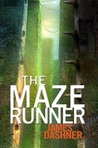
Review: The Maze Runner

The Maze Runner (Maze Runner, #1)The Maze Runner by James Dashner
My rating: 1 of 5 stars

I did not care for this book. About forty-five pages in, I realized I was unimpressed. I've been on such a dystopian lit. kick lately that I tried to figure out what made this book different and why I didn't like it. So here goes.

Both The Hunger Games (THG) and Divergent (D) have female authors; The Maze Runner (TMR) has a male author. Both THG and D have sixteen-year-old female protagonists; TMR has a sixteen-year-old male protagonist. Both THG and D are written in first person; TMR is written in limited third person. In both THG and D, the "monsters" are other people (mostly the government or ruling parties); in TMR (at least for the first 90% of the book), the "monsters" are actual living breathing (ridiculous, disgusting, impossible) monsters.

In THG and D, while both protagonists go on journeys and discover new information and conspiracies (which we discover along with them), we at least have some context. Information (settings, surroundings, current state of the world at large) is given in bits and pieces of the usual kind of exposition. The Maze Runner's whole gimmick is that there is no information. The protagonist starts with nothing, no memory, and we, as readers, have jack-squat right along with him. While it's an interesting gimmick, doing it for over 200 pages is frustrating/annoying/repetitive/a rather stupid concept.

It's the repetition that really started to annoy me. For how long can we listen to adolescent boys argue?
"What have you done?"
"I don't know what you're talking about!"
"What have you done?"
"I don't remember anything!"
Later, rinse, repeat for almost the entirety of this novel. In fact, I bet one could look at the majority of this book -- with its "no idea what to do," "just do what the older boys do" mentality -- as a metaphor for boys' sexual experience (or lack thereof) as teenagers.

Dashner's diction is also repetitive. I counted at least three times where Thomas "may not have had any memories, but was sure he just experienced the worst/saddest/most painful thing." I stopped counting after number three. Dashner also appears to know no other way to describe anxiety or stomach-dropping fear without using the word "acid." If Thomas has as much stomach acid or "acid in his veins" as Dashner says, I'm surprised he did not disintegrate before the end of the novel, consumed from the inside out by the ulcer that was surely eating its way out of his stomach.

Dashner also does not explain several things; I mean, other than the withholding of information. The annoying made-up "slang" the other boys use, for instance: "klunk" is explained, but the rest of the words are not. And the boys use the words ad nauseum. The resulting "dialect" is grating, annoying, and purposeless. If you're going to swear (or have your characters swear), just do it already. Don't rely on a made-up baby language to do it for you. (In order to view the teensy spoiler here, read the review directly on Goodreads and click "view spoiler").

Last but certainly not least, the characters are flat and therefore uninteresting. Perhaps that is symptomatic of them having no memories or background. Thomas is a blank slate as is Teresa. The only one remotely interesting is Chuck, the awkward and comedic chubby sidekick, and he's only marginally interesting by the fact that everyone else is not.

While I forced myself to finish this book, I will not be reading the others in the series. Feel free to tell me if anything interesting happens in those (though I doubt it).

Thursday, March 20, 2014

Review: The Curious Incident of the Dog in the Night-time

The Curious Incident of the Dog in the Night-TimeThe Curious Incident of the Dog in the Night-Time by Mark Haddon
My rating: 5 of 5 stars

I stayed up past midnight to finish this book, whilst crying for probably the last fifteen minutes. But more on that later.

Initially, this was a hard book for me to continue reading past the first page or two. The reason for that is two-fold. For starters, it opens with the death of a dog (that's in the description people; it's not a spoiler). As a self-described "animal person," the description of Wellington's death was a little hard to read.

Secondly, it's hard for me to read or watch scenes in which a character is unable to communicate their needs to others. I can tell what's going on and empathize greatly, but the other characters can't. I point to scene in How to Train Your Dragon as an example: it's sometimes excruciating for me to watch how long it takes Hiccup to figure out that Toothless doesn't leave because his wing is injured. So my empathy for Christopher and frustration for his situation almost stopped me from reading, but I'm glad I didn't.

His very unique point of view is what drives the reader to keep going in this book. Don't let its small size fool you; it's incredibly dense and emotional (and makes excellent use of footnotes!). I kept reading (past midnight) because I couldn't stop with Christopher still in pain of any kind. I knew there just had to be some kind of "happy ending" or at least a bit of a resolution, and I refused to go to sleep before I got there. His pain and my own pathos would have kept me from an easy sleep.

If, at some point, I write a paper analyzing this book, I would probably tackle the subject of Christopher's mother's handwriting as I believe her writing is some kind of commentary on the kind of person or mother she is (and I'm not sure how I feel about that).

Lastly, there were some parts of Christopher's personality and his logic and way of relating to the world that resonated so much with me (and made complete sense to me) that I don't doubt my own placement somewhere on the autism spectrum. It's a bit of a relief to see in print ways that I feel and things that I experience but can't seem to adequately verbalize.

View all my reviews

Wednesday, March 19, 2014

Review: Hollow City

Hollow City (Miss Peregrine's Home for Peculiar Children, #2)Hollow City by Ransom Riggs
My rating: 4 of 5 stars

First and foremost, I do not recommend reading this on an eReader -- at least not a little first edition one like mine. The photographs (which are a huge part of Riggs' writing) barely show up. I was able to view them on the electronic version on my laptop, but I still don't think that did them justice. That, of course, is not the author's fault, but mine.

However, I think I enjoyed the first book (and its photographs) more. This second book in the series does not contain the same creepy, Gothic feel as the first Miss Peregrine's Home for Peculiar Children. The photographs do not seem as "creepy" as before. And the reason is because the characters are not new, therefore not as startling to us. The novelty has somewhat worn off.

I still love the idea of his found photographs. I wonder if he creates the story around those photos, or has the story and adds photos later, or what kind of process it is.

Hollow City is still a good read. The plot takes a turn even I did not expect (actually two turns), so I was impressed by that. Along with book #1 and The Night Circus, I think this will be one I need to own a hard copy of for its visceral, physical qualities.

View all my reviews