Showing posts with label Jane Austen. Show all posts

Tuesday, September 15, 2020

The Other Bennet Sister (Book Review)

The Other Bennet SisterThe Other Bennet Sister by Janice Hadlow
My rating: 1 of 5 stars

**DNF**

I could not finish this book; it was an effort to get through the 100 pages (only 22% of the book!) that I did. It was simply too sad, too depressing.

After I got through the issue of reconciling what I knew of Mary's character from Pride & Prejudice with Hadlow's "version," there was the much larger issue of this "new" Mary's existence being utterly awful. Hadlow seems to have forgotten that Austen's original work is a comedy; this book is not a comedy but some terrible drama about a lonely, misunderstood girl surrounded by one-dimensional characters. While many of the original Pride & Prejudice characters are intended to be ridiculous, farcical, and/or satirical, Hadlow has made them simply mean.

Remembering that this book does "catch up" to the events of P&P, I forced myself to at least read that far, for curiosity's sake. And while I believe this book extends past the events of P&P to continue with Mary's life, I simply couldn't punish myself any further. I have no idea how it ends, but I couldn't endure Mary's misery any longer.

View all my reviews

Monday, August 24, 2020

The Jane Austen Society (Book Review)

The Jane Austen SocietyThe Jane Austen Society by Natalie Jenner
My rating: 3 of 5 stars

This book is a comfortable read. Not necessarily "comforting," but comfortable, like your favorite jeans or sweater. It's the mark of a good historical piece if it makes me wonder, "Is that true?" or "How close is this to the real thing?", driving me to do some research after reading (or watching). I can save you the trouble, though, as Jenner mentions in her afterword that while the places are real, the characters are not. That's not a bad thing, and I think speaks well for Jenner's writing that I assumed these characters were based, at least a little, on real people.

When discussing Austen, the characters bring up a couple of points of view that I hadn't thought of before or hadn't been taught in academia when studying Austen, so it's always enjoyable to have a different light shown on something. Jenner also (via her characters' discussions) touches on why we re-read Austen (or any piece with which we are intimately familiar); and while I rarely reread books, her sentiment does apply to things I'll rewatch for their comfort. I might pick up and reread some more Austen, too, after reading Jenner's book.

Jenner's allusions to Austen's characters and plots in her own are subtle, not precious or too "on the nose." I like being surprised sometimes, so when I did make a connection, I had that "I should have seen that earlier!" moment, which doesn't happen too often.

Please don't think the entire book is literary analysis because it's not; I just appreciate and gravitate towards those aspects.
This is a comfortable read -- not too taxing, enough Austen for fans, not so light as to be saccharine, but also not something that leaves me needing to know more about these particular characters.

View all my reviews

Friday, August 9, 2013

DCtP: The Honeymoon Is Over

Well, my initial enthusiasm for Death Comes to Pemberley is over.  It may have even been, dare I say it, preemptive.

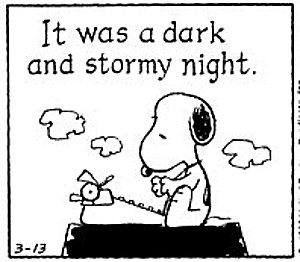
I finished the novel, and I'm left feeling...what?  Unsatisfied?  Misled?  James' "Prologue" is, indeed, rather brilliant, and for me, it may be the highlight of the book.  The rest of the novel proper doesn't contain that same Austen-esque wit and style.  While P.D. James is obviously quite familiar with the social conventions of Austen's time, the style of the book just isn't as lively (as either Austen or James' own prologue).  In fact, the opening chapters seem to have a Bronte influence*, a touch of the Gothic, "on a dark and stormy night" filled with foreboding until the actual murder is announced.

Now my misgivings with the book may be due entirely to genre; James is writing a murder mystery, not a drawing room comedy.  Her style might be entirely suited to the murder mystery genre.  I wouldn't know; I'm not a murder mystery afficianado and haven't been since I was obsessed with Lilian Jackson Braun's The Cat Who books in junior high.  It all felt much too fast-paced, but again, mystery book, not regency romance.  The resolution of James' plot is (un)suitably complicated and convoluted.  Is this typical for mystery?  It felt more like the wrapping up of loose ends in a farce than a period mystery.

More than that, though, is the fact that James' relationship with these characters seems too close and almost too comfortable and casual.  We are privy to their thoughts and feelings in a way we never are in Austen's world (especially Darcy).  There is no slightly distant ironic narrator.  I didn't care for that kind of relationship with the characters.

In short, the "Prologue" was the best part of the book for me.

(Snoopy courtesy of TVTropes.org)


*Don't  misunderstand me.  A touch of the Bronte is not considered a bad thing around here (pointing to Leonard's collection of Jane Eyre editions).  I just wasn't expecting it in this book.

Wednesday, July 31, 2013

Death Comes to Pemberley

If you know anything about me, you probably already know that I detest so-called "fan fiction" in almost any of its many forms.  There is a lot of fanfic out there, and most of it is bad.  Really bad.  Really, really bad. I also consider these "sequels" to classic literature to be fanfic of a kind.  I take my Victorian literature rather seriously, to a point.  I think I also have a lingering, if somewhat irrational fear, that the (probably legitimate) fanfic-sequel will taint or ruin my memories and knowledge of the original, similar to when your memory starts to conflate both the book and the film version of a thing.  That, of course, only applies to these "somewhat legitimate" published versions.  The rest of the fanfic I don't touch because bad writing hurts my soul.  (And do not get me started on the abomination that is anything Seth Grahame-Smith has ever touched!)

It is with such trepidation that I slowly approached Death Comes to Pemberley by J.D. James.  I only heard of it because they're making it into a film featuring Jenna Coleman of Doctor Who fame.  I did a little bit of research, and what can I say?  I'm more apt to believe an older woman with a professed "lifelong passion for Austen" than I am some twenty-something "ironic" hipster who claims he "took an English class once."

I've only read the "Prologue" so far, and I just have two words:

Thank you.

Thank you, P.D. James.  She has effectively captured some of the Victorian style and syntax while also retaining that spark of Austen's wit and (actual) ironic touch without being outright sarcastic or mean.  I actually chuckled out loud a couple of passages today whilst reading over lunch, like this one:
"Elizabeth had never been popular, indeed the more perceptive of the Meryton ladies occasionally suspected that Miss Lizzy was privately laughing at them.  They also accused her of being sardonic, and although there was uncertainty about the meaning of the word, they knew that it was not a desirable quality in a woman, being one which gentlemen particularly disliked" (9).
So we're off to a rousing start!  My expectations for the rest of the book have been raised from previously.  Let's just hope they don't fuck up the movie.

P.S.  Coleman recently took a break from filming to sign some autographs (in costume!!).